


Blog
Best Pet Friendly Rugs: How to Choose a Rug That Survives Real Life (And Avoid Costly Buying Mistakes)

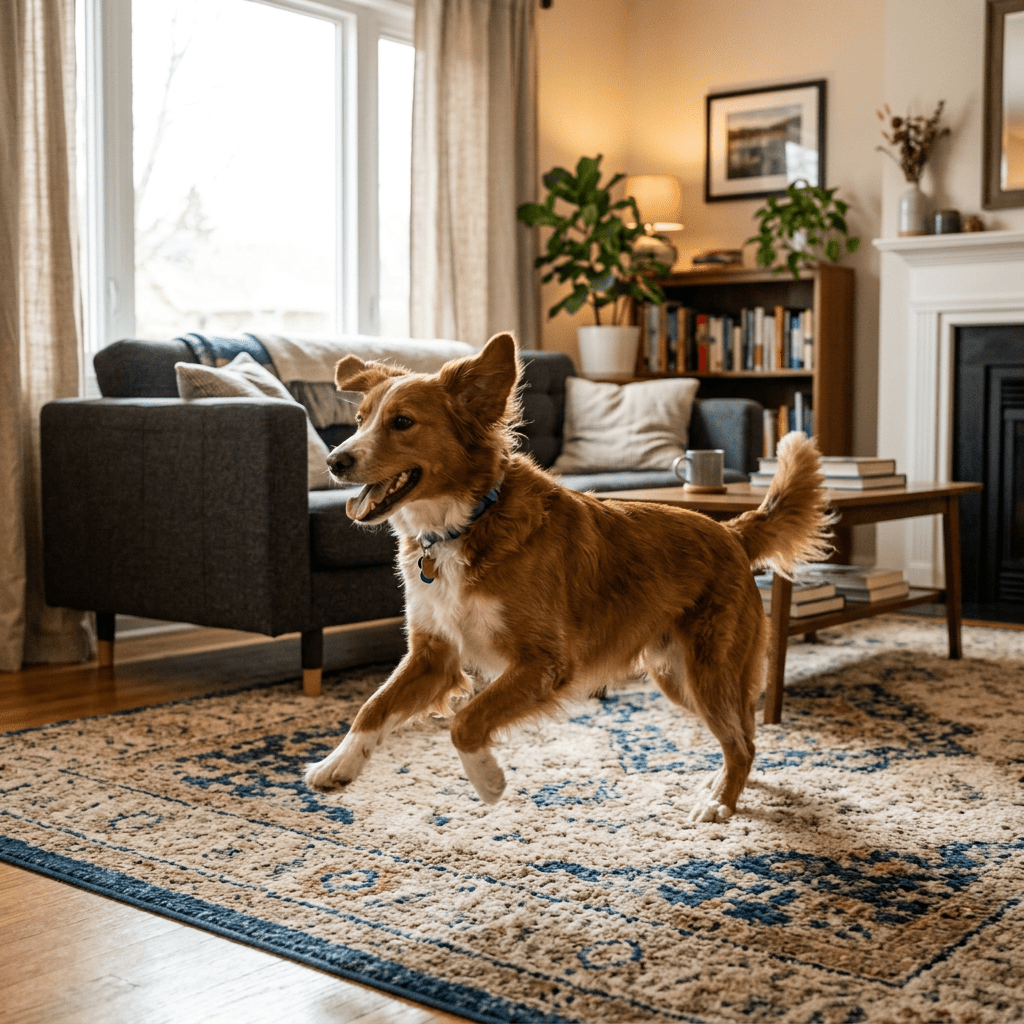
Here’s a strange thing pet owners discover too late: two rugs can live with the exact same dog and look completely different six months later. One still looks like a beautiful part of your home décor. The other looks like a crime scene.
The difference has almost nothing to do with the features most big-box brands advertise, and everything to do with a few overlooked details.
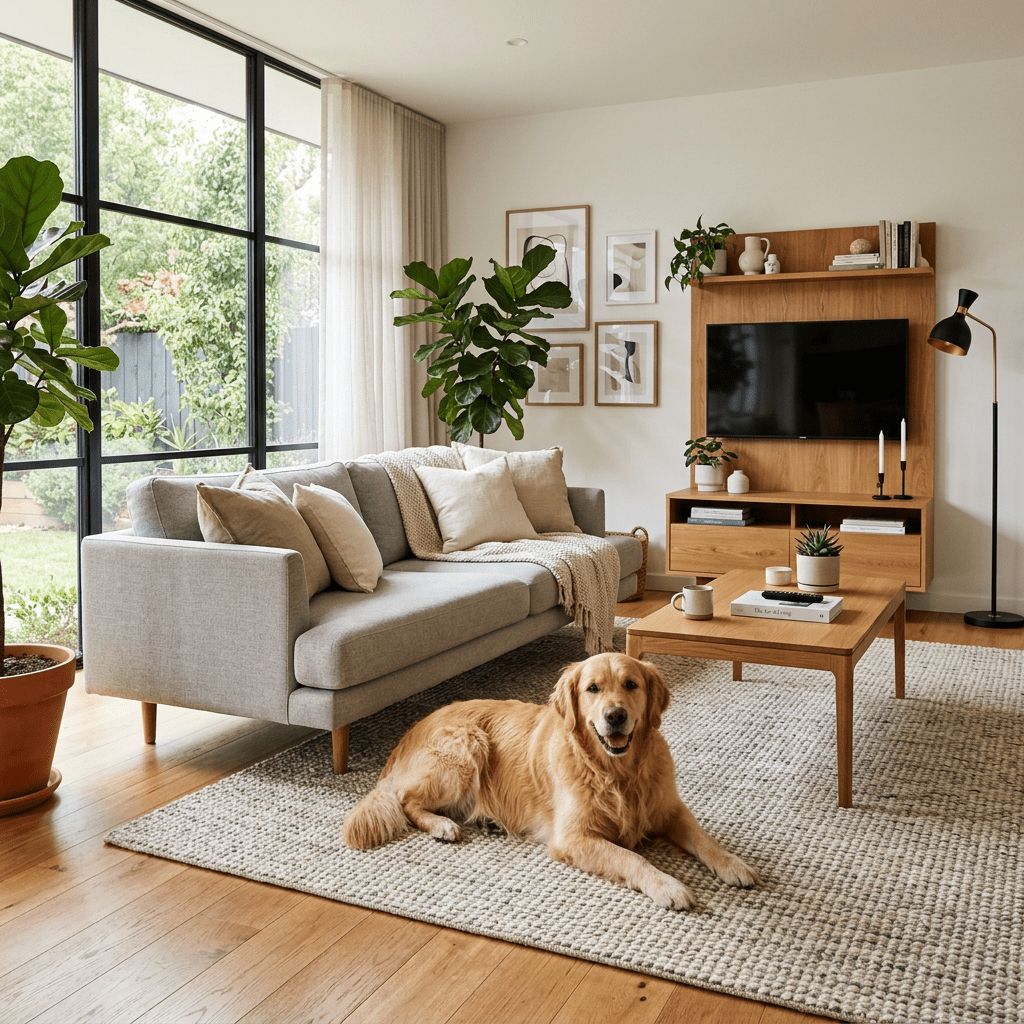
When shopping for a dog or cat-friendly home, most people focus purely on “durability.” But smart pet owners shop for survivability. The best pet-friendly rugs aren’t just the toughest ones; they are the rugs that still look great on an ordinary Tuesday after a week of fur storms, muddy paws, midnight zoomies, and the occasional “I couldn’t hold it” accident.
Before you drop money on an area rug you might regret, let’s break down how to choose a rug that actually handles real-life pet chaos.
The Pet Rug Survival Score: The Framework Most People Skip
Before buying any rug, stop looking at the price tag or the pattern for a second, and rate it on these six hidden factors:
- Fur Visibility: How quickly does shedding hair become glaringly noticeable?
- Claw Resistance: Will your pet’s nails pull up loops and cause ugly snags?
- Odor Retention: Does the material trap smells, or does it breathe?
- Accident Recovery: Can you clean up an unmentionable mess without leaving a permanent shadow?
- Cleaning Effort: Is it a breeze to vacuum, or do you have to fight the fibers?
- Long-Term Appearance: How quickly will high-traffic “zoomie tracks” wear down the pile?
A designer rug might score a perfect 10/10 for raw durability, but if it scores a 2/10 for fur visibility, it will drive you absolutely crazy. Don’t buy based on stain resistance alone—look for a balance.
The Zoomies Test: Why Some Rugs Fail in Six Months
For active pets, the biggest threat to your rug isn’t chewing or accidents—it’s thousands of tiny moments of friction. Think about the sudden traction needed for a sharp turn during a midnight zoomie fit.
This is why rug stability and construction matter more than softness.
| Rug Type | How It Performs | Why It Matters |
| The Survivors | Tight flatweaves, low-pile rugs, dense hand-knotted/hand-loomed foundations. | They offer zero leverage for claws to dig into or pull apart. |
| The Middle Ground | Medium-density tufted rugs, subtle texture variations. | Decent for older or calmer pets, but require regular maintenance. |
| The Absolute Failures | Shag rugs, long open loops, loose weaves, and decorative fringe. | Fringe becomes a chew toy; open loops act like a trap for claws and toenails. |
The Camouflage Matrix: Match Your Rug to the Fur, Not Just the Furniture
Many people design their rooms by matching the rug to the sofa. If you have a heavily shedding pet, match the rug to the fur.
Shedding is inevitable. Noticing it every second of the day doesn’t have to be. By picking a rug with textured patterns, heathered tones, or specific color variations, you buy yourself days of visual cleanliness.
- Golden Retrievers & Yellow Labs: Warm beiges, oatmeals, sands, and creams.
- Huskies & Australian Shepherds: Multi-tone grey blends and salt-and-pepper patterns.
- Black Labs & Dark Cats: Charcoal mixes, deep navies, and patterned dark neutrals.
- The Beautiful Mutts (Mixed Colors): Speckled, distressed traditional designs, and heavily patterned bohemian or geometric styles.
The Claw Snag Hierarchy
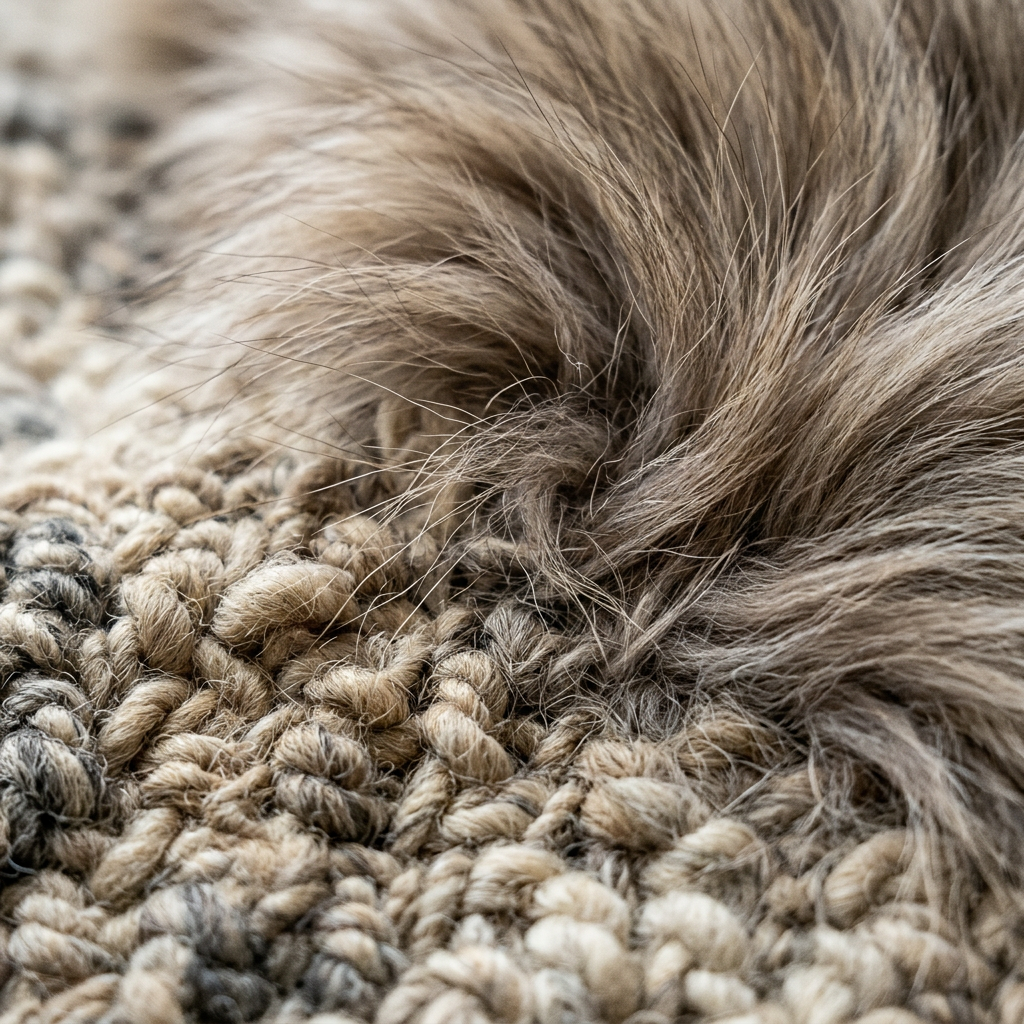
If fur is a visibility problem, claw damage is a structural failure. The moment your dog or cat’s nail finds a loose loop to catch on, the clock starts ticking on your investment.
- Lowest Risk: Low-pile, cut-pile (where the loops are cut flat), tight flatweaves, and dense wool.
- Highest Risk: Large, chunky loop piles (like Moroccan or Berber style) and rugs with raised, decorative 3D elements.
Rule of thumb: If you can easily push your pinky finger under a loop of the rug, your dog’s claw can find it too.
The Washable Rug Trap: Why “Washable” Doesn’t Always Mean Better
Washable rugs are marketed as the ultimate solution for pet parents. But there’s a catch: Many people buy them for a cleaning routine they will never actually follow.
Think about the reality of a large, room-sized washable rug. Once it’s dirty, you have to move your furniture, peel the rug off its pad, cram a heavy, stiff piece of fabric into your washing machine (assuming it even fits), hang-dry it for a day, and then perfectly realign it under your heavy furniture.
- When they are worth it: Small entry mats, hallway runners, or kitchen accents where puppies are still house-training.
- The Smarter Alternative: Buy a high-quality, dense rug that naturally resists stains and hides fur between cleanings. The most practical rug isn’t the one you have to wash in a machine every week; it’s the one that rarely looks like it needs washing in the first place.
The Ultimate Material Cheat Sheet
When it comes down to the actual fibers, here is how the most common rug materials stack up in a pet-friendly household:
1. Wool (The Premium Gold Standard)
- Pros: Naturally resilient, coated in natural lanolin (which repels stains and liquids), and incredibly easy to spot-clean. Tightly woven wool handles claws beautifully.
- Cons: Can be pricier upfront; can experience minor shedding when brand new.
- Best For: Long-term investments, living rooms, and adult pets.
2. Polypropylene / Olefin (The Synthetic Champion)
- Pros: Virtually bulletproof. These rugs are highly stain-resistant, non-porous (meaning they don’t lock in odors), and can often be scrubbed aggressively or even hosed down outside.
- Cons: Doesn’t have the luxurious texture of natural fibers; can feel a bit synthetic underfoot.
- Best For: High-accident zones, puppies, and budget-friendly styles.
3. Nylon (The High-Traffic Workhorse)
- Pros: Incredibly elastic and tough. It bounces back from heavy paw traffic and resists claw snags better than almost any other synthetic.
- Cons: Can be prone to static, which means it might hold onto pet hair a bit tighter during vacuuming.
- Best For: Main hallways, stair runners, and homes with multiple active dogs.
4. Natural Fibers like Jute & Sisal (The Danger Zone)
- Pros: Beautiful, earthy aesthetic.
- Cons: Avoid these. Jute and sisal act like giant sponges for liquids. If your pet has an accident on a jute rug, the moisture seeps into the core fibers, causing permanent staining and holding onto odors forever. Furthermore, cats love to use them as scratching posts, instantly shredding them.
The Bottom Line
Not every beautiful rug deserves a pet, and no pet parent deserves the headache of a high-maintenance rug.
Skip the ultra-soft, delicate showroom promises. Instead, choose a low-pile, tightly constructed rug that matches your pet’s color profile and shrugs off a muddy paw print. You’ll spend far less time stressing with a vacuum and a spray bottle, and more time enjoying your furry best friend.